VSME – Voluntary Sustainability Reporting for Small and Medium-Sized Enterprises
VSME is the standard that enables small and medium-sized enterprises to meet the requirements of customers, banks, or investors without having to establish a full-scale CSRD process. Here, we’ll go over what VSME entails, who should report, and how to get started.
What is VSME?
The Voluntary Sustainability Reporting Standard for SMEs (VSME) is a voluntary standard that provides small and medium-sized enterprises with a structured and manageable path into sustainability reporting, without having to meet the same requirements as large publicly traded companies.
The standard was developed by the same organization that created the ESRS standards for CSRD, which means that VSME is designed to fit naturally alongside CSRD reporting. This can be an advantage, for example, if you are a supplier to a larger company, and it can also help you prepare for any future legal requirements.
The standard covers the same sustainability categories as CSRD — climate impact, water use, biodiversity, labor practices, and governance —but is based on the “where applicable” principle. This means you only report on the ESG aspects that are actually relevant to your business.
Why is VSME becoming increasingly important?
A common driver for VSME reporting is requirements from larger customers or financiers who are themselves subject to the CSRD and need data from their value chain—for example, from suppliers. Having a structured report in place can therefore become a competitive advantage, not just a way to meet others’ requirements.
There are several reasons why more SMEs are choosing to start reporting now:
• Financing: Banks and investors are increasingly demanding ESG data—even from smaller companies—as part of their credit decisions and risk assessments.
• Future-proofing: Having a basic framework in place makes it easier to scale up if the company grows to meet CSRD requirements, or if regulations change.
• Brand and trust: A clear, documented sustainability report strengthens credibility with customers and business partners.

How to Get Started with VSME
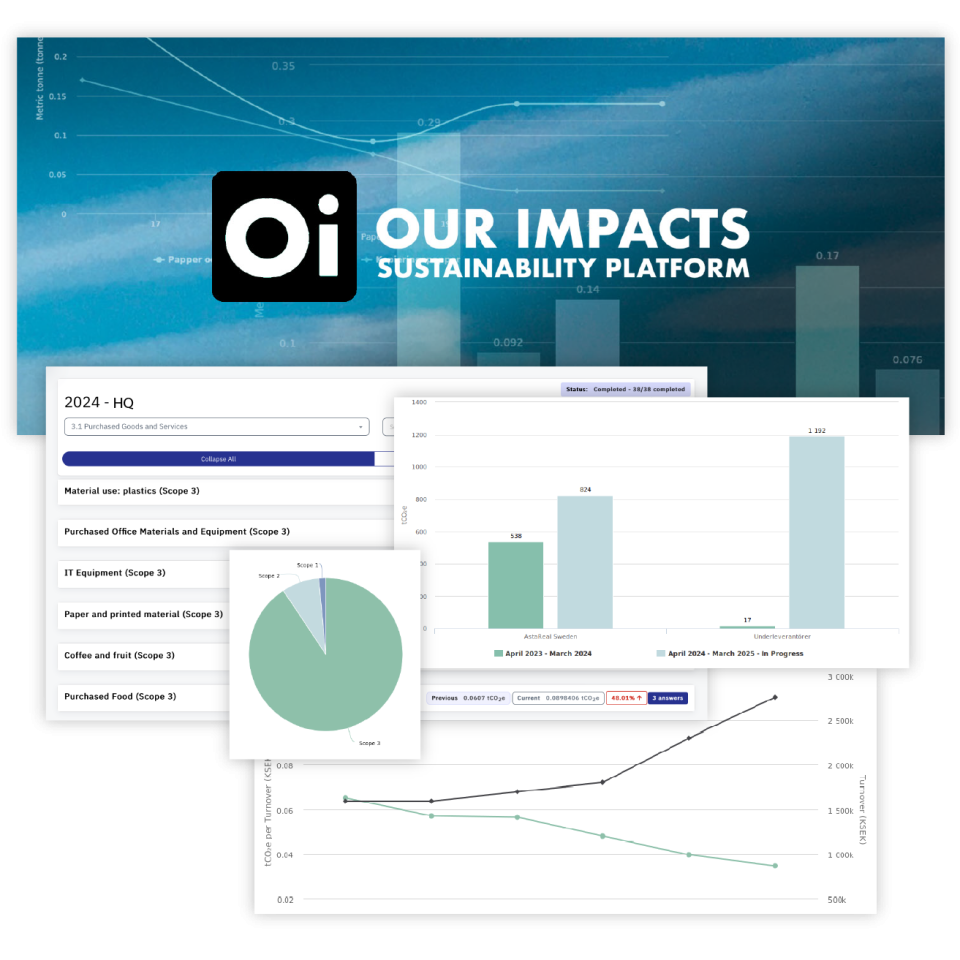
On ZeroMission’s sustainability platform, Our Impacts , you can easily select the information relevant to your VSME reporting without having to set up a full CSRD process.
Here’s how the process works with ZeroMission:
1. Needs Analysis: We review your operations and identify which parts of VSME are relevant to you: the basic module, the comprehensive module, or a combination.
2. Data Collection: Climate calculations and energy data are collected and quality-checked by our climate strategists.
3. Report: We help you structure the responses according to the VSME format.
4. Follow-up: We provide you with ongoing guidance so that the report can evolve as your needs change.
Frequently Asked Questions About VSME
Is VSME mandatory?
-
No. VSME is a voluntary standard intended for small and medium-sized enterprises that are not subject to the mandatory requirements of the Swedish Financial Supervisory Authority ( CSRD).
Here you can read more about CSRD.
Do I need to perform a double materiality analysis within VSME?
-
No, it is not a requirement. VSME follows the “as applicable” principle, which means that you only report on the ESG topics that are relevant to your business.
A simpler, internal materiality assessment can still be valuable as a foundation for your sustainability efforts.
Who should start using VSME reporting?
-
VSME is particularly well-suited for those who:
- Are a supplier or subcontractor to a larger company that is subject to CSRD
- Addresses questions about sustainability data from banks, investors, or procurement processes
- Want to build credible sustainability communications without burdening the organization with a full-scale CSRD process
- Want to stay one step ahead in case your company outgrows its current reporting requirements?
Do you need help with reporting? At ZeroMission , you can hire an experienced climate strategist on a part-time basis or as needed. Read more here.
Could VSME reporting lead to " CSRD" compliance in the future?
-
Yes. Preparing a VSME report lays the groundwork for a potential future transition to the European Standards for Reporting on Sustainability ( CSRD, ESRS), should the company grow to meet the mandatory requirements.
What is the difference between VSME and CSRD?
-
VSME covers the same sustainability categories as CSRD, such as climate impact, water use, biodiversity, labor and governance, but contains several important differences:
- Mandatory vs. voluntary reporting
- ESRS: Mandatory for large companies under CSRD.
- VSME: voluntary and targeted at SMEs outside the scope of the CSRD.
- Reporting principle
- ESRS: Requires a double materiality assessment (DMA), where companies must assess both how sustainability issues affect the company and how the company affects the environment and society.
- VSME: Follows an "if applicable" principle, which means that companies only report on those ESG topics that are relevant to their business.
- Reporting structure and scope
- ESRS: Comprehensive requirements with detailed quantitative information and action plans.
- VSME: Modular structure with two levels: a basic module with 11 items of information and a comprehensive module with 9 additional items of information. The reporting allows for simpler, narrative-based answers.
- Publication
- ESRS: Requires disclosure of sustainability information in accordance with CSRD.
- VSME: No disclosure requirement. SMEs can choose to share their report with specific stakeholders, such as investors.
- Support and guidance
- ESRS: Detailed guidance and requirements, but can be complex for SMEs to implement without external resources.
- VSME: Developed with the limited resources of SMEs in mind, with simplified requirements and supporting material to facilitate implementation.
Other services



We help you pick up the pace
Contact us for an informal meeting on how to calculate, reduce or take responsibility for your emissions through the purchase of carbon credits.
Latest News
Sign up for our newsletter.