Mangroves as a Climate Solution – A Visit to the Mikoko Pamoja Climate Project in Kenya
March 17, 2026
To ensure we work with the best climate projects on the market, we maintain regular, close contact and strong ties with the projects we partner with. That’s why project visits are a regular part of our work. In February of this year, ZeroMission’s Head of Sales & Team Climate Contribution visited the Mikoko Pamoja mangrove project in Kenya, a project that protects and restores mangrove forests. Here you can read a report on Maria’s visit to the project—a project that Crown Princess Victoria has also visited!
In February of this year, I had the privilege of visiting one of our wonderful projects: Mikoko Pamoja on Kenya’s northern coast, which is the world’s first Blue Carbon project on the voluntary carbon credit market.
Visit a climate project in a mangrove forest
Reading annual reports and third-party verifications from a project provides valuable technical knowledge, but visiting a project offers something entirely different! It gives us the opportunity to truly see the climate benefits the projects contribute and how the local population is affected by the project. Through conversations with project coordinators and local residents, we gain a completely different insight into how the lives of the community and individuals are impacted.
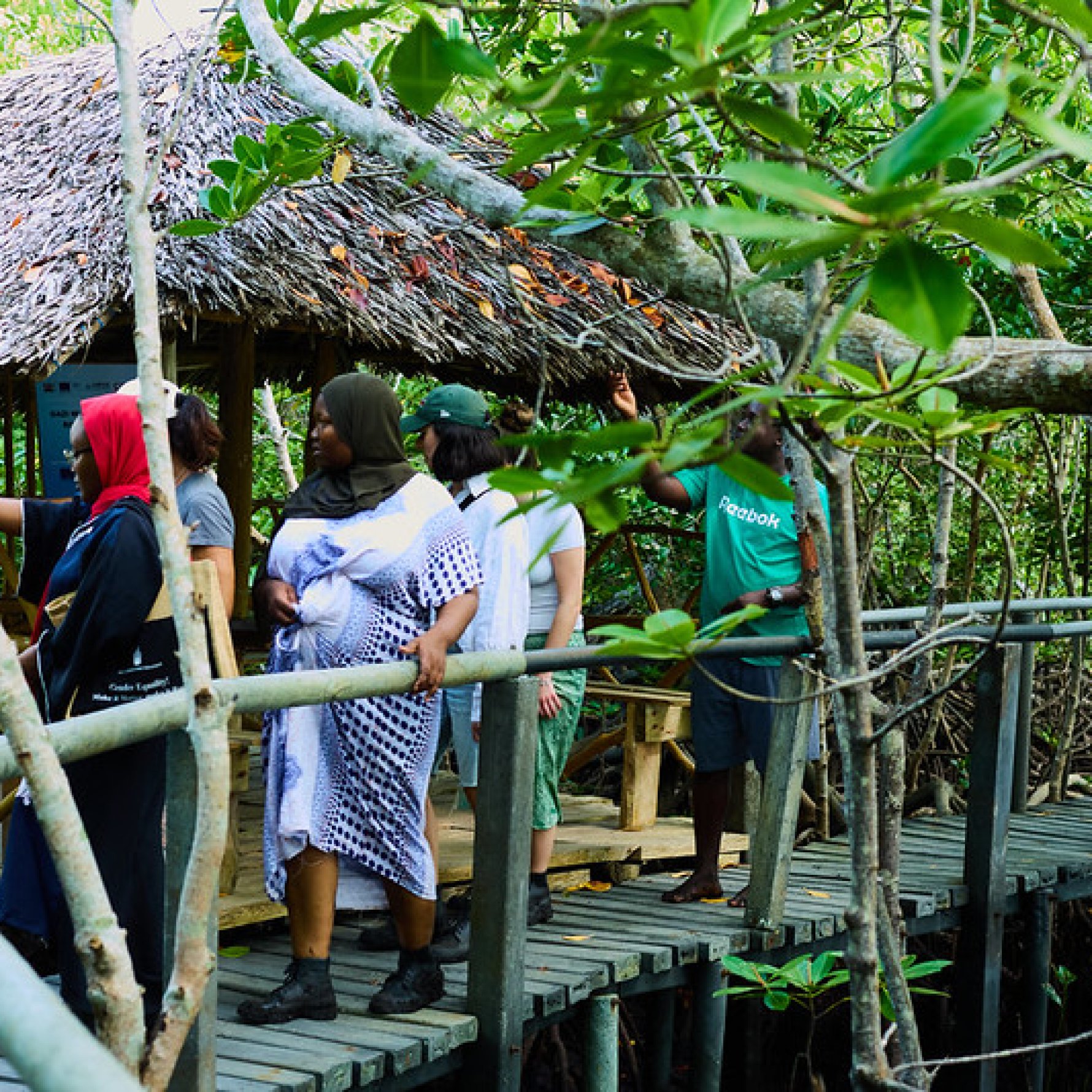
Visiting a climate project provides an opportunity to truly see the climate benefits these projects contribute and how the local population is affected by the project.
Mikoko Pamoja – a climate project certified by Plan Vivo
The mangrove forest in Gazi Bay, where the project is located, has steadily declined every year since 1985 due to human exploitation—both legal and illegal—as the local population has been directly dependent on the mangroves for firewood and building materials. The area has also experienced significant population growth, which has further increased the pressure on natural resources. Climate change, with frequent floods and storms, has also led to increased sedimentation and the death of the trees.
Since 2010, when the project began, the trend has reversed. Efforts are now underway to both protect existing mangrove forests and replant damaged areas.
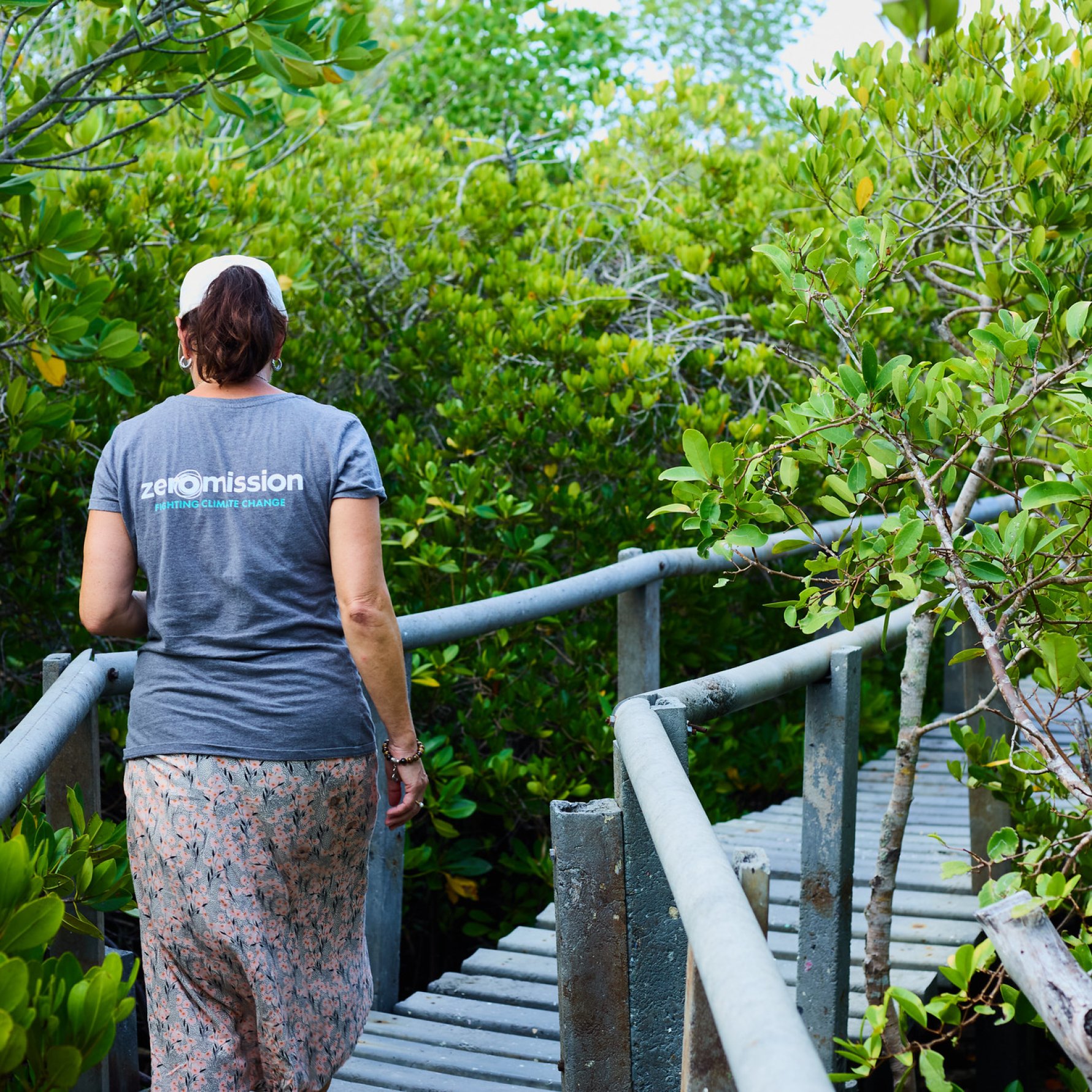
The mangrove forest where the project is located has been steadily shrinking every year since 1985 due to human exploitation—both legal and illegal—as the local population has been directly dependent on the mangroves for firewood and building materials. Now, thanks to the project’s activities, the trend has reversed.
Instead of sourcing their building materials and firewood from the mangrove forest, other tree species are planted in a separate section of the project area, designated specifically for use as firewood. For every tree that is cut down, a new one is planted.
Just as in all Plan Vivo projects, at least 60% of the proceeds from the sale of carbon credits are reinvested in the local community. The village community decides annually how the funds will be used, and during my visit I saw, among other things, schools, a mosque, and a health center that had been renovated. All thanks to the sale of carbon credits.
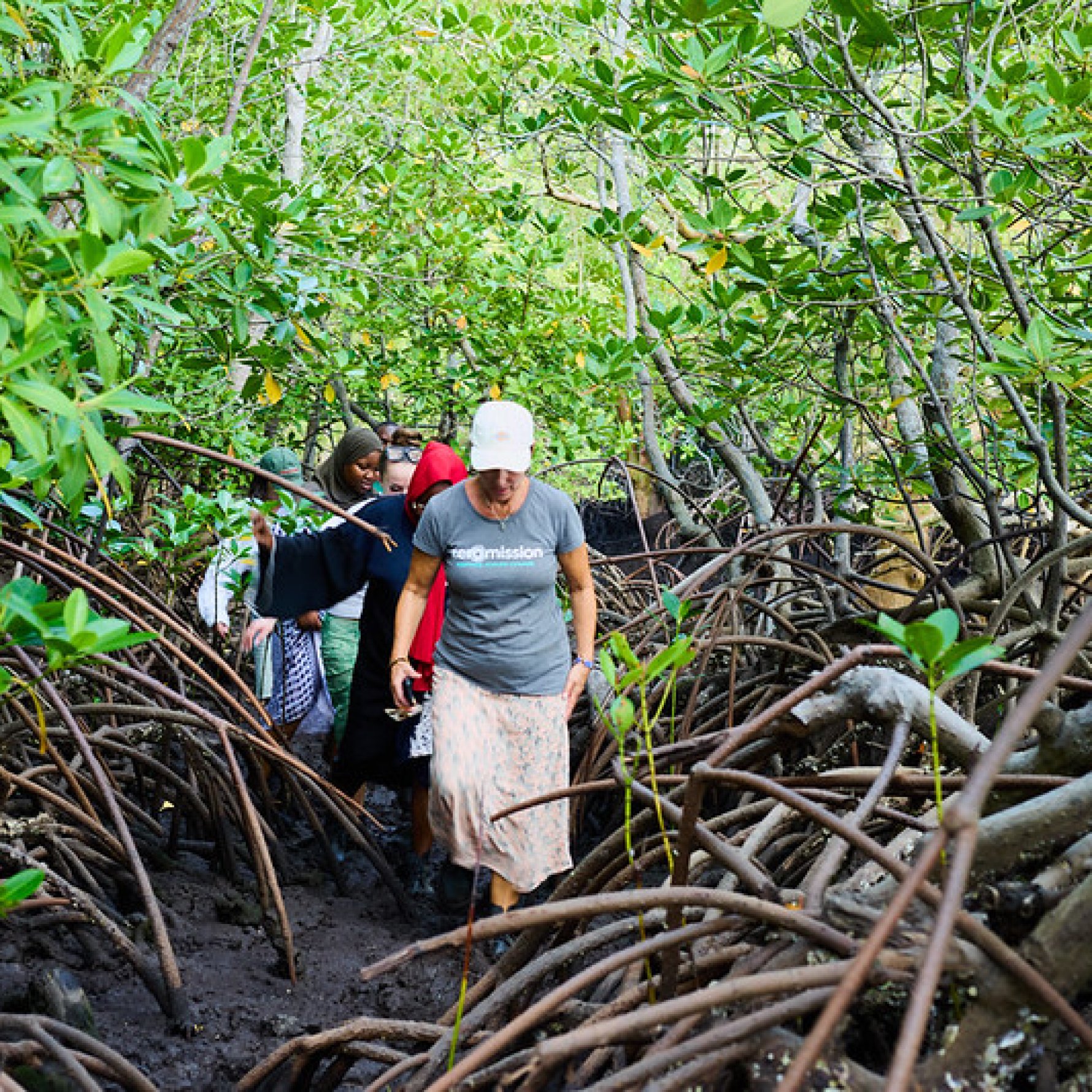
A few years ago, Crown Princess Victoria visited the Mikoko Pamoja project. I can’t help but wonder if she also had to trudge through the muddy mangrove forest!
Mangrove forests as carbon sinks
To calculate the climate benefits of the projects, the number of trees replanted is carefully measured. The trees are also measured for circumference and height, providing a reliable basis for calculating how much carbon dioxide they sequester.
Mangrove trees are highly effective at storing carbon—far more so than terrestrial trees and plants—because carbon dioxide is stored in the mud and sediment in which the trees grow. When branches and leaves fall and the trees die, they sink to the bottom beneath the water’s surface, where they slowly decompose.
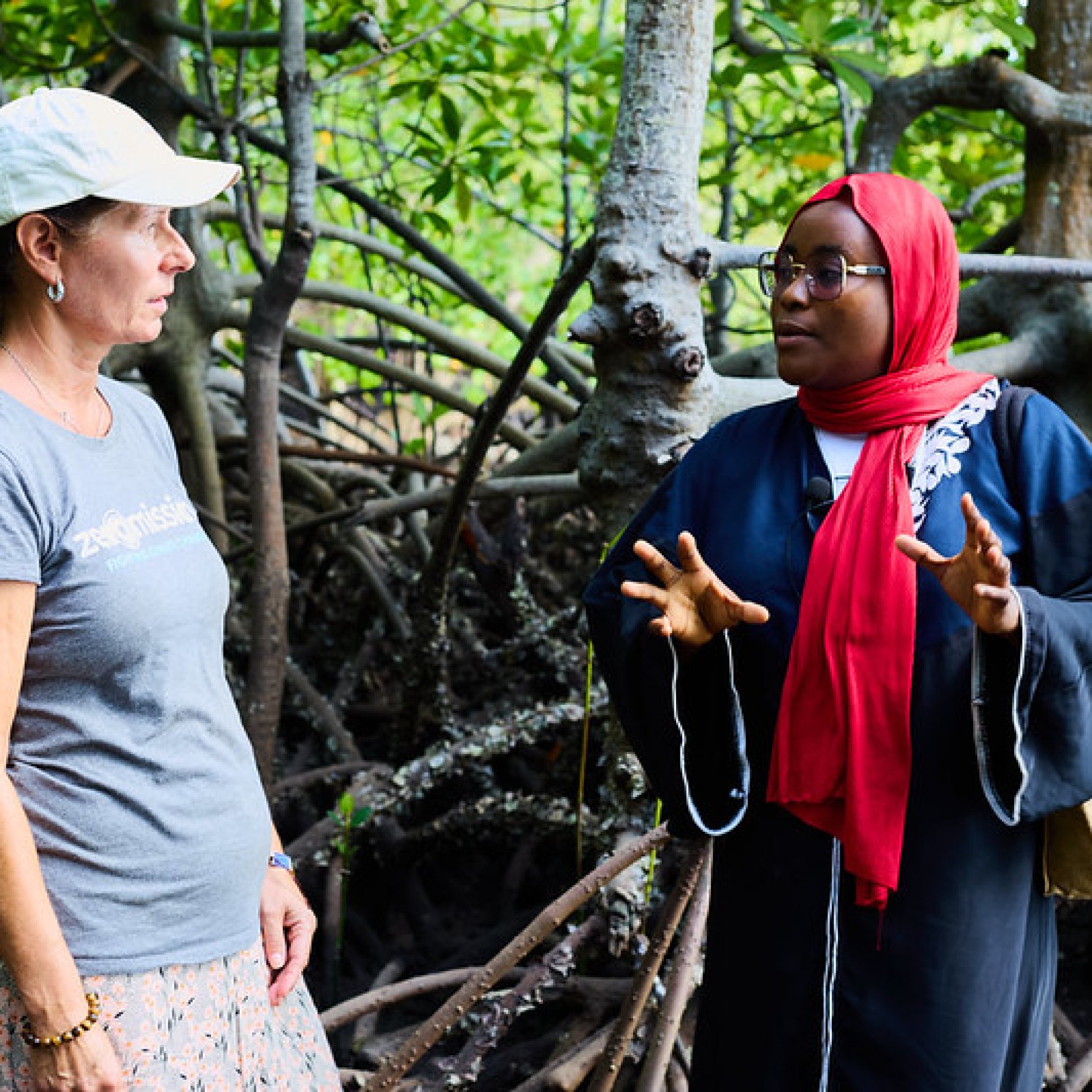
If the mangrove forests were to disappear, coastal communities would be severely affected, as the mangroves act as a natural barrier against the sea. Without the trees, flooding would become a major problem in the villages of Zuwena and Aziza, since the tides already periodically reach all the way up to the village.
Preserving mangrove forests is important for the climate and local villages
I also met two young women who live in the village, Zuwena and Aziza, who both say that their lives would have been completely different if the project hadn’t existed. Thanks to the project, their lives have improved, and they’ve gained a whole new understanding of why it’s important to preserve the mangroves.
If the mangrove forests were to disappear, coastal communities would be severely affected, as the mangroves act as a natural barrier against the sea. Without the trees, flooding would become a major problem in the villages of Zuwena and Aziza, since the tides already periodically reach all the way up to the village. The loss of mangrove forests is also a major problem globally.
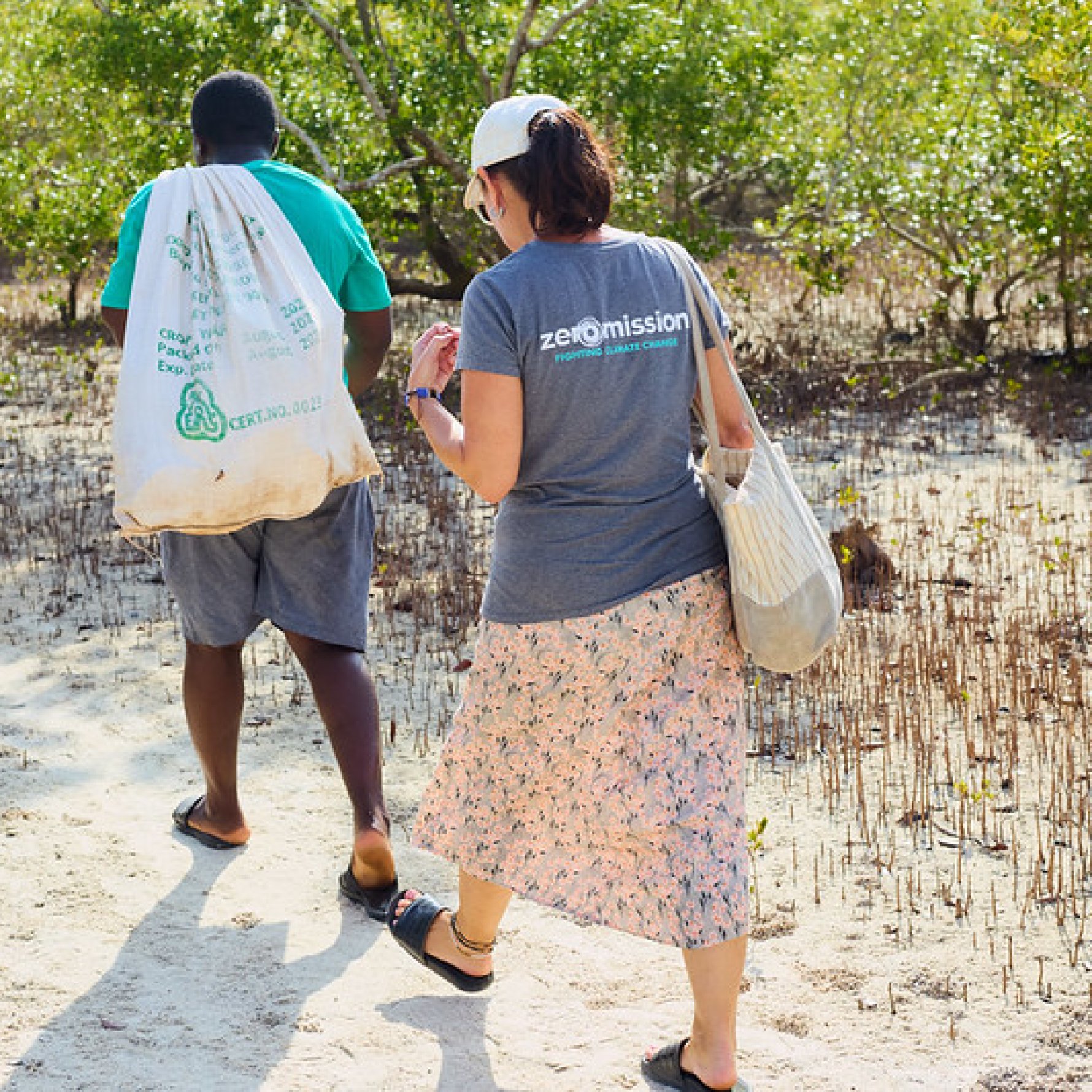
Mangrove trees are highly effective at storing carbon—far more so than terrestrial trees and plants—because carbon dioxide is stored in the mud and sediment in which the trees grow. When branches and leaves fall and the trees die, they sink to the bottom beneath the water’s surface, where they slowly decompose.
Visit by Swedish royalty to a climate project
A few years ago, Crown Princess Victoria visited the project. I can’t help but wonder if she also got to trudge through the muddy mangrove forest and end her visit by helping to peel and chop potatoes at Aziza’s home!